From Raw Lot to Building Pad — the Full Workflow
Most site prep projects follow the same sequence, and we can take a lot through all of it or step in at any stage:
- Clearing and grubbing. Trees, brush, stumps, and root mats come out — roots left under a pad rot and settle. See our dedicated land clearing page for how debris handling and hauling work.
- Stripping topsoil. Organic soil can't go under a structure. We strip it, and where it makes sense, stockpile it on site for final landscaping instead of paying to haul it both ways.
- Cut and fill. We cut the high side of the lot and use that material to build up the low side, balancing earthwork on site wherever the soil allows — every truckload we don't import or export is money you don't spend.
- Building pad construction. Fill goes in in compacted lifts — thin layers, each compacted before the next — not dumped and shoved. In our red clay, moisture control during compaction is the whole game: too wet and it pumps, too dry and it won't densify. Done right, Cecil clay compacts into an excellent pad; done wrong, it settles under your slab.
- Rough grading and drainage. The lot is shaped so water moves away from the pad during construction and after — in a region where close to 20% of Augusta's land sits in mapped floodplain, pad elevation and site drainage are not afterthoughts. Related work: drainage solutions and foundation excavation.
- Erosion control. Silt fence, construction exits, and inlet protection installed and maintained per the permit, so inspections pass and mud stays off the county's road.
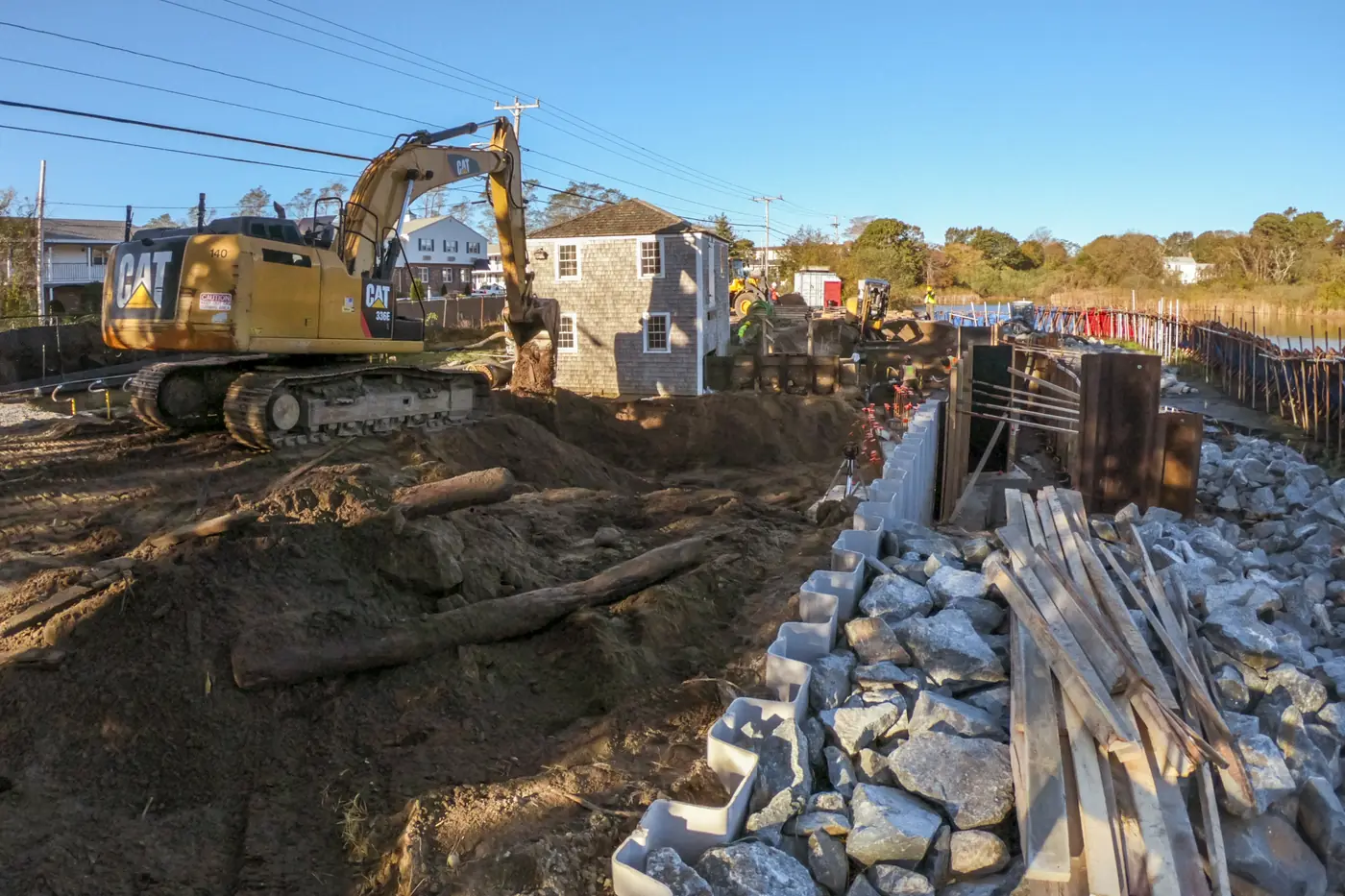 Photo: USDA NRCS (public domain)
Building in the CSRA's Growth Corridors
Columbia County is one of the fastest-growing areas in Georgia, and the growth around Fort Eisenhower keeps Grovetown, Evans, and the Harlem side busy with new homesites, garages, shops, and small commercial pads. We prep sites for:
- Custom home builders and GCs who need pads certified-ready on a date, not "sometime soon"
- Owner-builders putting a house, shop, or barndominium on family land in Hephzibah, Appling, or across the river near Aiken
- Additions and outbuildings — garage slabs, workshop pads, pole barn sites
- Small commercial projects — retail pads, storage sites, church and office additions
Because Augusta sits on the fall line, soil conditions can shift within a single parcel — sandy soil at one corner, dense red clay at another. We read the ground as we work and flag anything (soft spots, unexpected fill, buried debris) to you and your builder before it becomes a foundation problem.
Permits, Inspections & Paperwork
Land disturbance in Richmond County and Columbia County is regulated, and getting it wrong stops a project cold. Augusta–Richmond County requires an approved soil erosion and sedimentation control plan before a grading permit is issued for non-exempt projects, Columbia County issues land disturbance permits through its Stormwater Compliance Department, and construction disturbing one acre or more requires coverage under Georgia EPD's NPDES construction stormwater general permits, including an erosion, sedimentation and pollution control plan and a Notice of Intent filed at least 14 days before disturbance begins. Requirements differ between counties and change over time, so we confirm what your specific parcel needs before work starts, coordinate with your engineer or builder on the erosion control plan, and keep the site inspection-ready.
Working With Your Builder
Site prep sits between your lot and everyone else's schedule, so we run it like a trade, not a favor: we work from the site plan and pad elevations your builder or engineer provides, communicate in writing, and hit the dates we commit to. When the concrete contractor shows up, the pad is at grade, compacted, and dry enough to form on. If your builder wants compaction testing by a geotechnical firm, we build lifts to spec and schedule around their technician — their passing report is your assurance, not our say-so.
What Site Preparation Costs in Augusta
No honest contractor quotes site prep sight-unseen, because the range is wide: a simple pad on a cleared, level lot is a few thousand dollars, while a wooded, sloped acre needing clearing, deep fill, and full erosion control can run well into five figures. The drivers:
- Clearing — how wooded the lot is ($2,000–$6,000 per acre is the typical clearing range)
- Earthwork balance — whether cut and fill balance on site or dirt must be trucked in or out
- Pad size and fill depth — a 24×24 garage pad vs. a full house pad on a slope
- Soil and water — soft spots, springs, or floodplain elevation requirements add fill
- Erosion control scope — driven by the permit and the site's slope
- Access — tight lots slow production
We walk the lot free, take the plan, and give you a firm written quote with the earthwork, trucking, and erosion control itemized.
Frequently Asked Questions
How much does site preparation cost?
For a typical CSRA homesite, expect anywhere from a few thousand dollars for a simple pad on an open lot to $15,000+ for a wooded, sloped lot needing clearing, imported fill, and full erosion control — the honest answer is that the lot dictates the price. Send us the address and site plan or call (762) 224-7903, and we'll walk it and put a firm number in writing.
How long does site prep take?
Most residential lots take one to three weeks from mobilization to certified pad, depending on clearing, earthwork volume, and — in our clay — weather. Rain shuts down compaction until the soil dries to workable moisture, so we build realistic float into the schedule we give your builder rather than promising a date a thunderstorm will break.
Do I need a permit to prepare my lot?
Usually yes for anything beyond minor work — Augusta–Richmond County requires an approved erosion control plan and grading permit for non-exempt projects, Columbia County issues land disturbance permits, and disturbing an acre or more triggers Georgia EPD NPDES stormwater permit coverage with an erosion control plan. We confirm the requirements for your parcel before starting and coordinate the erosion control installation the permit calls for.
What is cut and fill?
Cut and fill means excavating soil from the high parts of your lot (cut) and using it to raise the low parts (fill), compacted in layers, so the site reaches plan grade using its own dirt. A balanced cut/fill is the cheapest earthwork there is — every load we don't truck in or haul off saves you real money — and we design the grading plan around that balance wherever the soil quality allows.
Will you work directly with my builder or GC?
Yes — site prep is typically scheduled and specced directly with the builder: we work from their pad elevations and site plan, keep them updated in writing, and coordinate with their geotech for compaction testing when specified. You can hand us off after the first call if you'd rather the builder run it.